Autore: admin

  • NICFD 2018 schedule

    NICFD 2018 schedule

    It is now available the full schedule of the NICFD conference.

    [vc_separator type=’transparent’ position=’left’ color=” thickness=” up=’15’ down=”]

    [button size=’medium’ style=” text=’SHEDULE OF NICFD2018′ icon=” icon_color=” link=’https://nicfd2018.blogs.ruhr-uni-bochum.de/index.php/schedule/’ target=’_blank’ color=’#ffffff’ hover_color=’#ffffff’ border_color=” hover_border_color=” background_color=’#dd6719′ hover_background_color=’#f28033′ font_style=’italic’ font_weight=’600′ text_align=’center’ margin=’15’]

    [vc_separator type=’transparent’ position=’left’ color=” thickness=” up=’15’ down=”]

  • JOIN US AT NICFD 2018

    JOIN US AT NICFD 2018

    It is our great pleasure to welcome you to the 2nd International Seminar on Non-Ideal Compressible-Fluid Dynamics for Propulsion & Power, which will be held on the 4th and 5th of October 2018 in Bochum, Germany.

    NICFD 2018 is intended to promote the exchange of scientific information, to encourage and consolidate the interaction between researchers and professionals, with a special emphasis on the progress in research, development, and applications of the topics related to the field of propulsion and power.

    The themes range from the theoretical foundations to advanced numerical and experimental practices and applied technologies. The conference provides an exciting opportunity to share, learn and discuss the latest insights.

    The conference is organised by Prof. Francesca di Mare (Thermal Turbomachines and Aeroengines, Ruhr-Universität Bochum), Prof. Andrea Spinelli (CREALab, Politecnico di Milano) and Prof. Matteo Pini (Propulsion & Power, TUDelft).

    Further infomation can be found on the flyer and on the website.

    [vc_separator type=’transparent’ position=’left’ color=” thickness=” up=’15’ down=”]

    [button size=’medium’ style=” text=’MORE INFORMATION ON NICFD2018′ icon=” icon_color=” link=’https://nicfd2018.blogs.ruhr-uni-bochum.de/’ target=’_blank’ color=’#ffffff’ hover_color=’#ffffff’ border_color=” hover_border_color=” background_color=’#dd6719′ hover_background_color=’#f28033′ font_style=’italic’ font_weight=’600′ text_align=’center’ margin=’15’]

    [vc_separator type=’transparent’ position=’left’ color=” thickness=” up=’15’ down=”]
  • Congratulations, Stefano

    Congratulations, Stefano

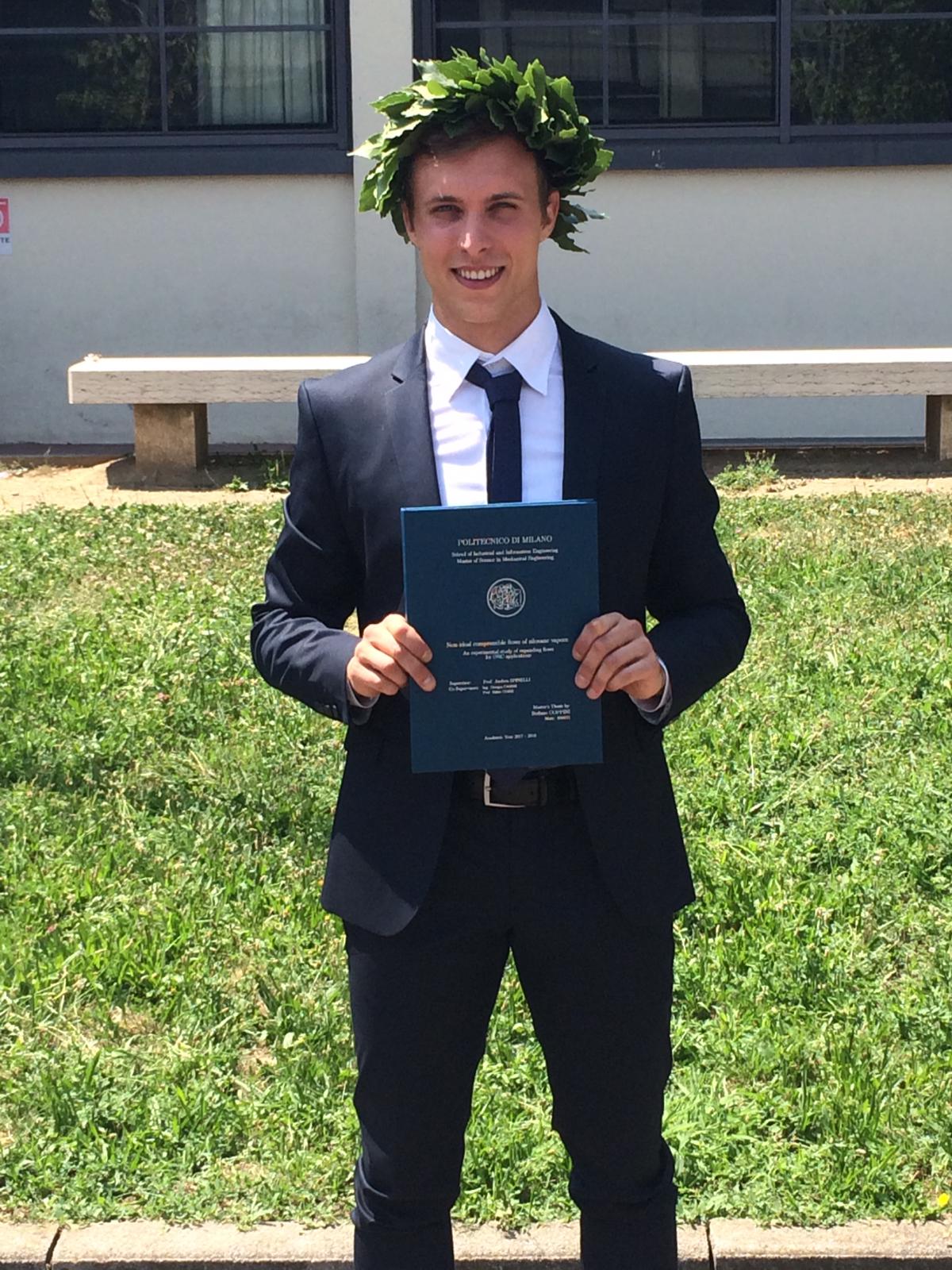
    Congratulations to the mechanical engineer Stefano Coppini, who just graduated with a master thesis developed at our laboratory with the title “Non-ideal compressible flows of siloxane vapors: an experimental study of expanding flows for ORC applications”.

    Congratulations engineer!

  • New paper about experimental results of the TROVA

    New paper about experimental results of the TROVA

    A new paper entitled “Experimental evidence of non-ideal compressible effects in expanding flow of a high molecular complexity vapor” was published by Experiments in fluids. It reports experimental results of an experimental campaign carried out with siloxane MDM on supersonic non-ideal nozzle flows.


    You can find further information by clicking here.


  • Congratulations, Nicola

    Congratulations, Nicola

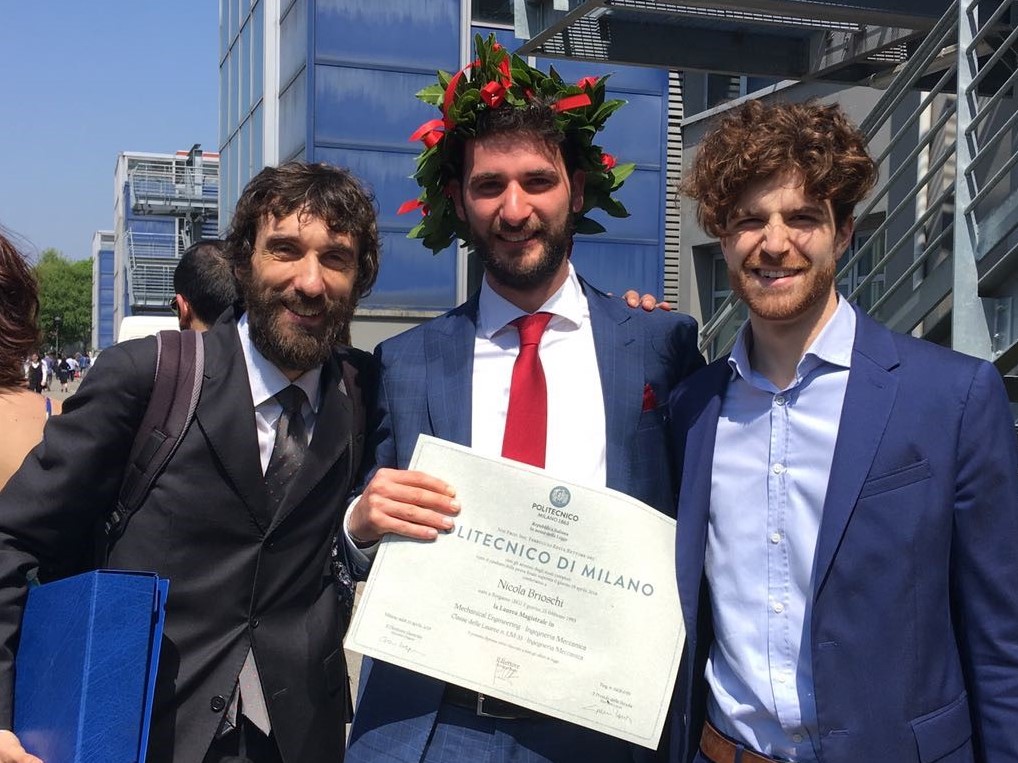
    Nicola Brioschi just graduated in mechanical engineering with a master thesis developed at our lab with the title “Experimental investigation of thermal stability of linear siloxanes mixtures”.

    Congratulations!

  • Bachelor Thesis Work on research projects for ORC applications

    Bachelor Thesis Work on research projects for ORC applications

    Review of experimental research projects for ORC applications

    [vc_separator type=’transparent’ position=’left’ color=” thickness=” up=’15’ down=”]

    Advisor: Spinelli Andrea
    Co-Advisor: Giorgia Cammi, Simone Gallarini,  Alberto Guardone

    [vc_separator type=’transparent’ position=’left’ color=” thickness=” up=’15’ down=”]
    Organic Rankine cycles gained a relevant role in power production from low to medium temperature sources and for low to medium plant size. Recently, several experimental research projects were developed, to better understand the fundamental physics and plant components functioning. Indeed, the underlying physics and the functioning of such components differ from the one of steam Rankine cycle components, mainly due to the different nature of the organic fluid.

    [vc_separator type=’transparent’ position=’left’ color=” thickness=” up=’15’ down=”]
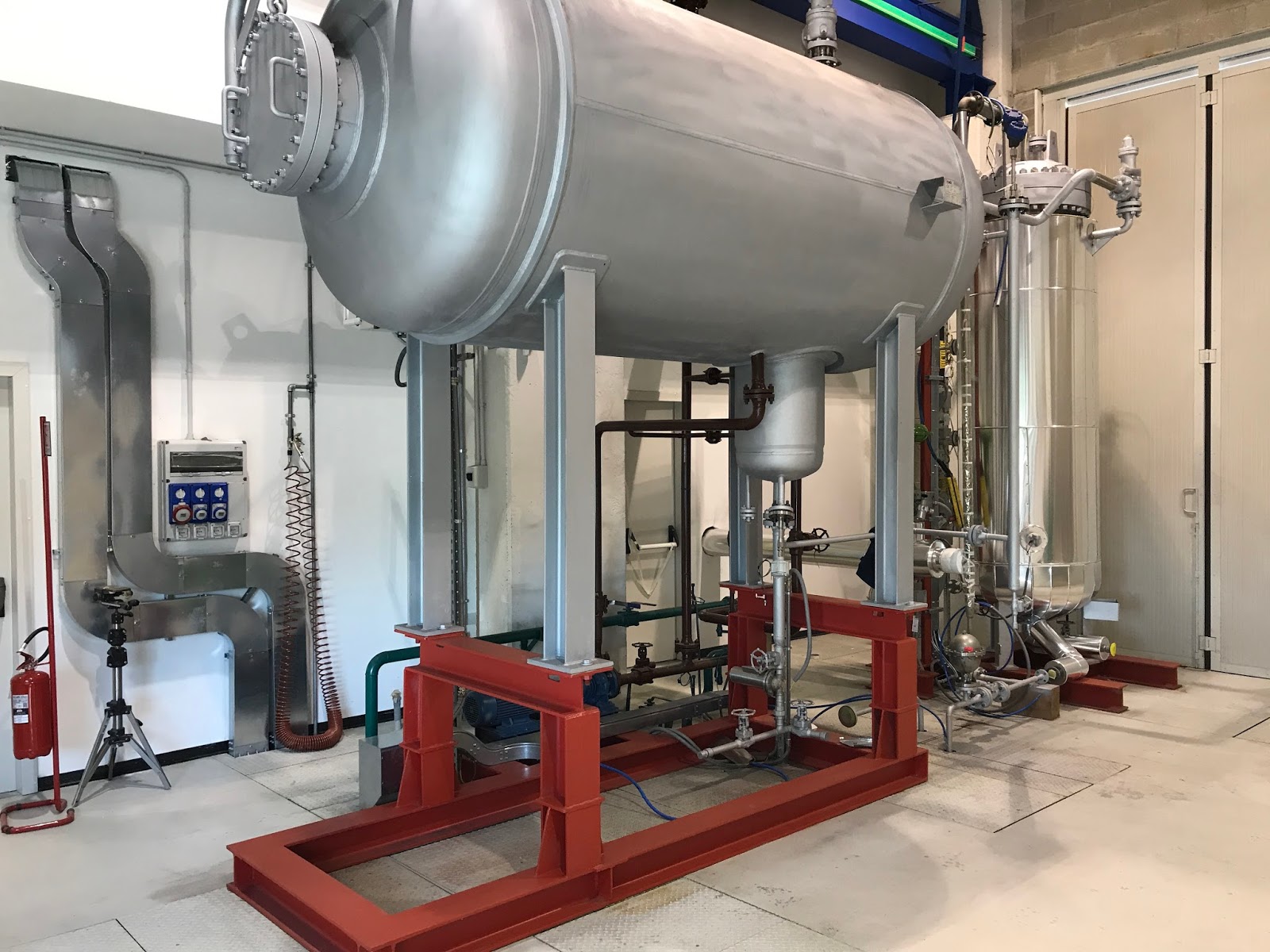
    The thesis work consists of a literature research and analysis on projects about ORC applications (turbines, pump, heat exchangers, thermal stability of organic fluids). The student will be assisted by the CREA Lab team.

    More info: andrea.spinelli@polimi.it

    [vc_separator type=’transparent’ position=’left’ color=” thickness=” up=’15’ down=”]
    [button size=’medium’ style=” text=’APPLY’ icon=” icon_color=” link=’mailto:andrea.spinelli@polimi.it’ target=’_blank’ color=’#ffffff’ hover_color=’#ffffff’ border_color=” hover_border_color=” background_color=’#dd6719′ hover_background_color=’#f28033′ font_style=’italic’ font_weight=’600′ text_align=’center’ margin=’15’]

  • Master Thesis Work on Non-ideal Compressible Flows

    Master Thesis Work on Non-ideal Compressible Flows

    Experimental investigation of non-ideal compressible flows of organic vapors for ORC applications 

    [vc_separator type=’transparent’ position=’left’ color=” thickness=” up=’15’ down=”]
    Advisor: Spinelli Andrea
    Co-Advisor: Giorgia Cammi, Alberto Guardone

    [vc_separator type=’transparent’ position=’left’ color=” thickness=” up=’15’ down=”]
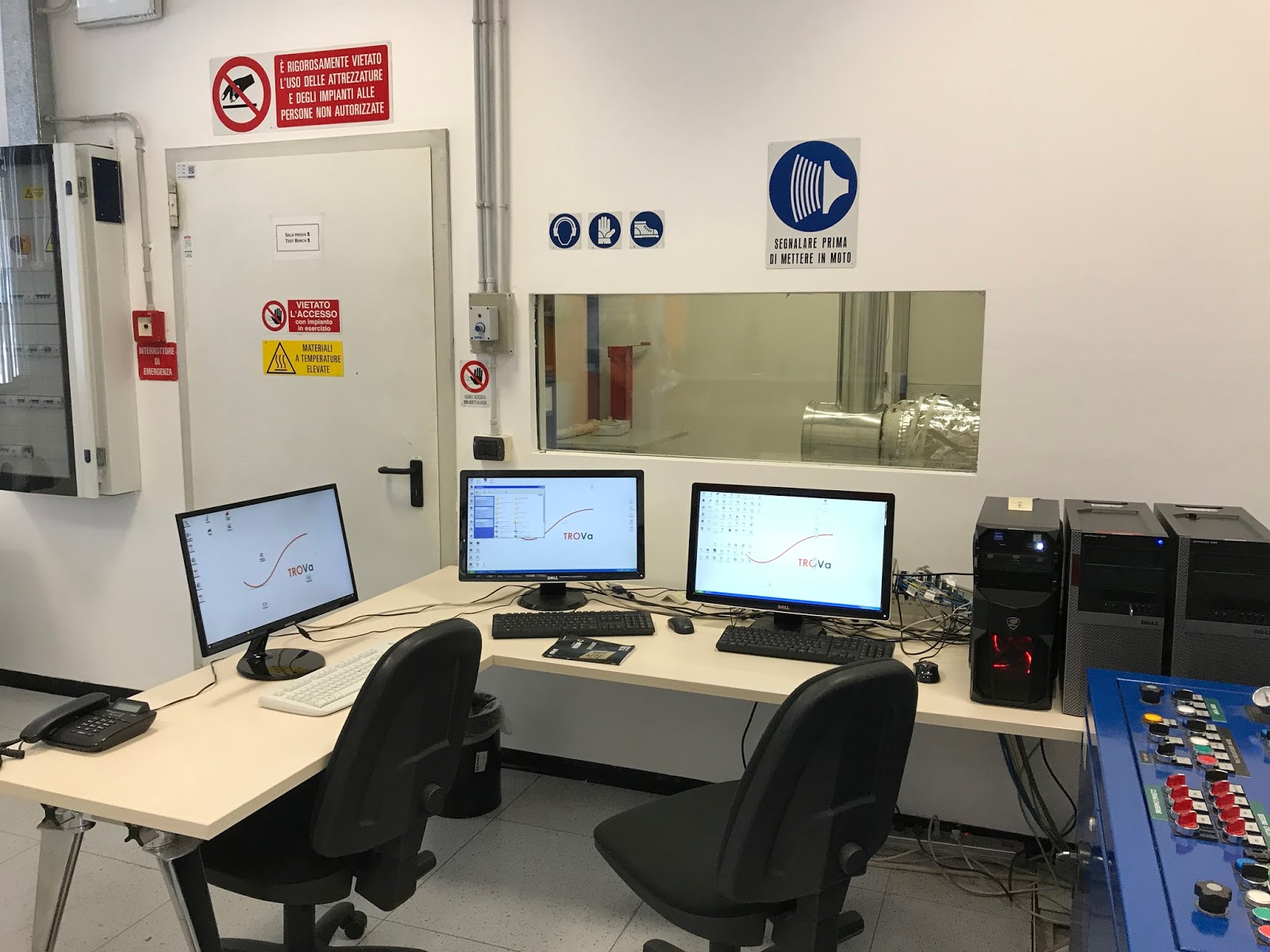
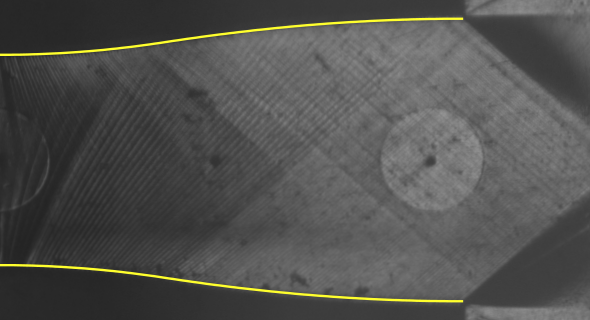
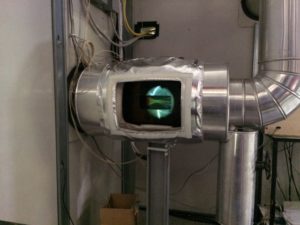
    The TROVA (Test Rig for Organic VApors) is a facility built at CREA Lab (Politecnico di Milano) implementing a batch organic Rankine cycle. The turbine is replaced by a test section, where fluid dynamics measurements are performed. Within a high-pressure reservoir an organic fluid (currently a siloxane) is evaporated up to non-ideal saturated, superheated or supercritical thermodynamic conditions. The vapor is then discharged through a planar, converging-diverging nozzle, the simplest test section which realizes an expansion process comparable to the one occurring within ORC turbine blade channels. The vapor is then condensed and pumped back to the high-pressure reservoir. The flow field within the nozzle is characterized by pressure and temperature measurements and by schlieren visualizations, aiming at investigating the different behavior with respect to the ideal gas one. In such a way, also the accuracy of the CFD tools (embedding non-ideal thermodynamic models) employed for the design/analysis of ORC components (and for diverse non-ideal applications) can be verified. Besides nozzle flows, are also of interest the study of non-ideal behavior of oblique and normal shock waves, which are obtained by inserting aerodynamic or bluff bodies within the supersonic flow downstream the TROVA test section.

    [vc_separator type=’transparent’ position=’left’ color=” thickness=” up=’15’ down=”]
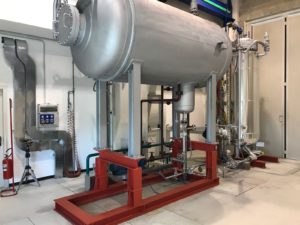
    The thesis consists in performing temperature and pressure measurements and schlieren visualizations in converging diverging nozzles, in the characterization of the fluid dynamics (shock waves) around aerodynamic bodies and in the comparison of experimental values with those obtained by CFD simulations.

    More info: andrea.spinelli@polimi.it

    [vc_separator type=’transparent’ position=’left’ color=” thickness=” up=’15’ down=”]
    [button size=’medium’ style=” text=’APPLY’ icon=” icon_color=” link=’mailto:andrea.spinelli@polimi.it’ target=’_blank’ color=’#ffffff’ hover_color=’#ffffff’ border_color=” hover_border_color=” background_color=’#dd6719′ hover_background_color=’#f28033′ font_style=’italic’ font_weight=’600′ text_align=’center’ margin=’15’]

  • CREA lab is happy to welcome you!

    CREA lab is happy to welcome you!

    We are in Building B16A (the red brick building across the street from Aula Magna).

    Please register at the ORC 2017 registration desk for a full visit.


  • Join us at ORC 2017!

    Join us at ORC 2017!

    The IV International Seminar of Organic Rankine Cycle Power Systems starts tomorrow!

    Join us at 9.00 in Carassa-Dadda for the opening ceremony.

    More at www.orc2017.com

  • Presentation of experimental results from TROVA at ORC 2017

    Presentation of experimental results from TROVA at ORC 2017

    221 – Experimental observation of non-ideal expanding flows of Siloxane MDM vapor for ORC applications 
    by Andrea Spinelli, Giorgia Cammi, Marta Zocca, Simone Gallarini, Fabio Cozzi, Paolo Gaetani, Vincenzo Dossena, Alberto Guardone
    Session 4C, Thursday at 14.20


    Abstract: Extensive experimental results characterizing the supersonic expansion of an organic vapor in non-ideal conditions are reported in this paper for the first time. The collected data also allowed the assessment of the accuracy of Computational Fluid Dynamic (CFD) tools employed to predict the non-ideal behavior of such flows, including the consistency of thermodynamic models adopted. The investigation has been carried out on the converging-diverging nozzle test section of the Test Rig for Organic VApors (TROVA), at the Laboratory of Compressible fluid-dynamics for Renewable Energy Application (CREA) of Politecnico di Milano. Supersonic nozzle flow has been chosen as the simplest one of significance for organic Rankine cycle (ORC) turbine channels. The working fluid under scrutiny is Siloxane MDM, a widely employed compound for high temperature ORCs. MDM vapor expands through the TROVA nozzle at moderate non-ideal conditions in the close proximity of the vapor saturation curve. This is the region where ORC expanders typically operate, thus proving the relevance of the investigation for the ORC community. Indeed, detailed experimental data representative of typical ORC expansions were lacking in the open literature up to date. Two different nozzle geometries, featuring exit Mach number of 2.0 and 1.5 respectively, have been tested, exploring a wide range of thermodynamic inlet conditions and diverse levels of non-ideality; from moderate non-ideal state, indicated by a compressibility factor Z = Pv/RT ≅ 0.80, to dilute gas conditions, Z ≥ 0.97. Maximum operating total pressure and temperature are PT ≅ 5 bar and TT ≅ 250 °C. The nozzle flow has been characterized in terms of total pressure, total temperature, static pressure at discrete locations along the nozzle axis, and schlieren imaging. In contrast to the well known case of polytropic ideal gas, the vapor expansion through the nozzle is found to be dependent on the inlet conditions, thus proving the non-ideal character of the flow. This influence is found to be consistent with the one predicted by the quasi-1D theory coupled with simple non-ideal gas models. Experimental data at the nozzle centerline have also been compared with those resulting from a two-dimensional viscous CFD calculation carried out using the SU2 software suite and the improved Peng Robinson Stryjek Vera (iPRSV) thermodynamic model. A very good accordance is found, demonstrating the high accuracy of the applied tools.