221 – Experimental observation of non-ideal expanding flows of Siloxane MDM vapor for ORC applications
by Andrea Spinelli, Giorgia Cammi, Marta Zocca, Simone Gallarini, Fabio Cozzi, Paolo Gaetani, Vincenzo Dossena, Alberto Guardone
Session 4C, Thursday at 14.20
Abstract: Extensive experimental results characterizing the supersonic expansion of an organic vapor in non-ideal conditions are reported in this paper for the first time. The collected data also allowed the assessment of the accuracy of Computational Fluid Dynamic (CFD) tools employed to predict the non-ideal behavior of such flows, including the consistency of thermodynamic models adopted. The investigation has been carried out on the converging-diverging nozzle test section of the Test Rig for Organic VApors (TROVA), at the Laboratory of Compressible fluid-dynamics for Renewable Energy Application (CREA) of Politecnico di Milano. 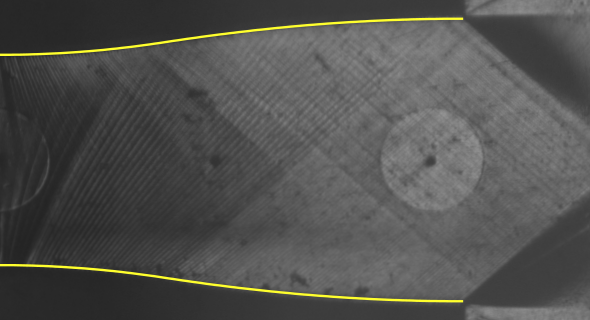 Supersonic nozzle flow has been chosen as the simplest one of significance for organic Rankine cycle (ORC) turbine channels. The working fluid under scrutiny is Siloxane MDM, a widely employed compound for high temperature ORCs. MDM vapor expands through the TROVA nozzle at moderate non-ideal conditions in the close proximity of the vapor saturation curve. This is the region where ORC expanders typically operate, thus proving the relevance of the investigation for the ORC community. Indeed, detailed experimental data representative of typical ORC expansions were lacking in the open literature up to date. Two different nozzle geometries, featuring exit Mach number of 2.0 and 1.5 respectively, have been tested, exploring a wide range of thermodynamic inlet conditions and diverse levels of non-ideality; from moderate non-ideal state, indicated by a compressibility factor Z = Pv/RT ≅ 0.80, to dilute gas conditions, Z ≥ 0.97. Maximum operating total pressure and temperature are PT ≅ 5 bar and TT ≅ 250 °C. The nozzle flow has been characterized in terms of total pressure, total temperature, static pressure at discrete locations along the nozzle axis, and schlieren imaging. In contrast to the well known case of polytropic ideal gas, the vapor expansion through the nozzle is found to be dependent on the inlet conditions, thus proving the non-ideal character of the flow. This influence is found to be consistent with the one predicted by the quasi-1D theory coupled with simple non-ideal gas models. Experimental data at the nozzle centerline have also been compared with those resulting from a two-dimensional viscous CFD calculation carried out using the SU2 software suite and the improved Peng Robinson Stryjek Vera (iPRSV) thermodynamic model. A very good accordance is found, demonstrating the high accuracy of the applied tools.
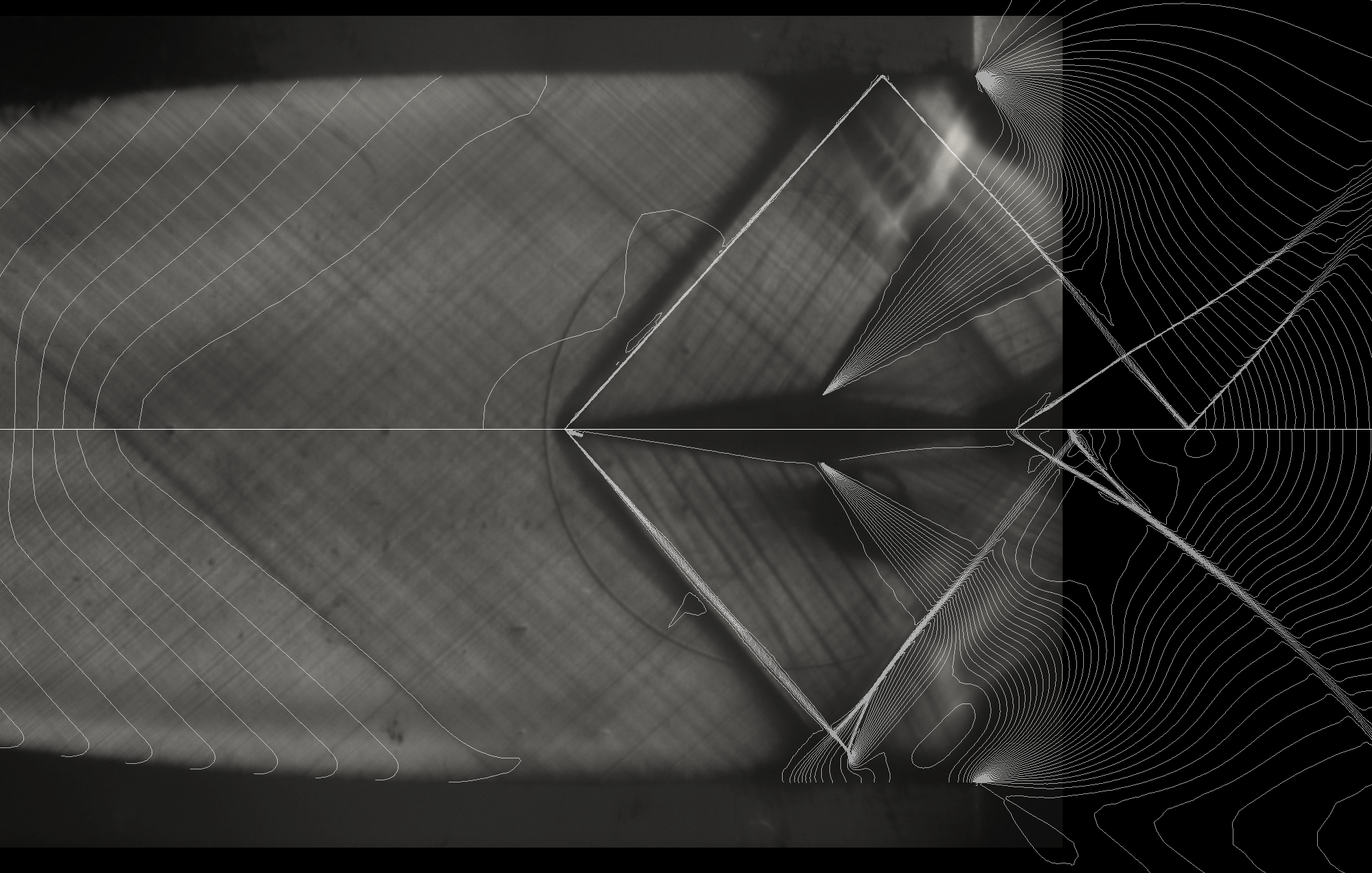
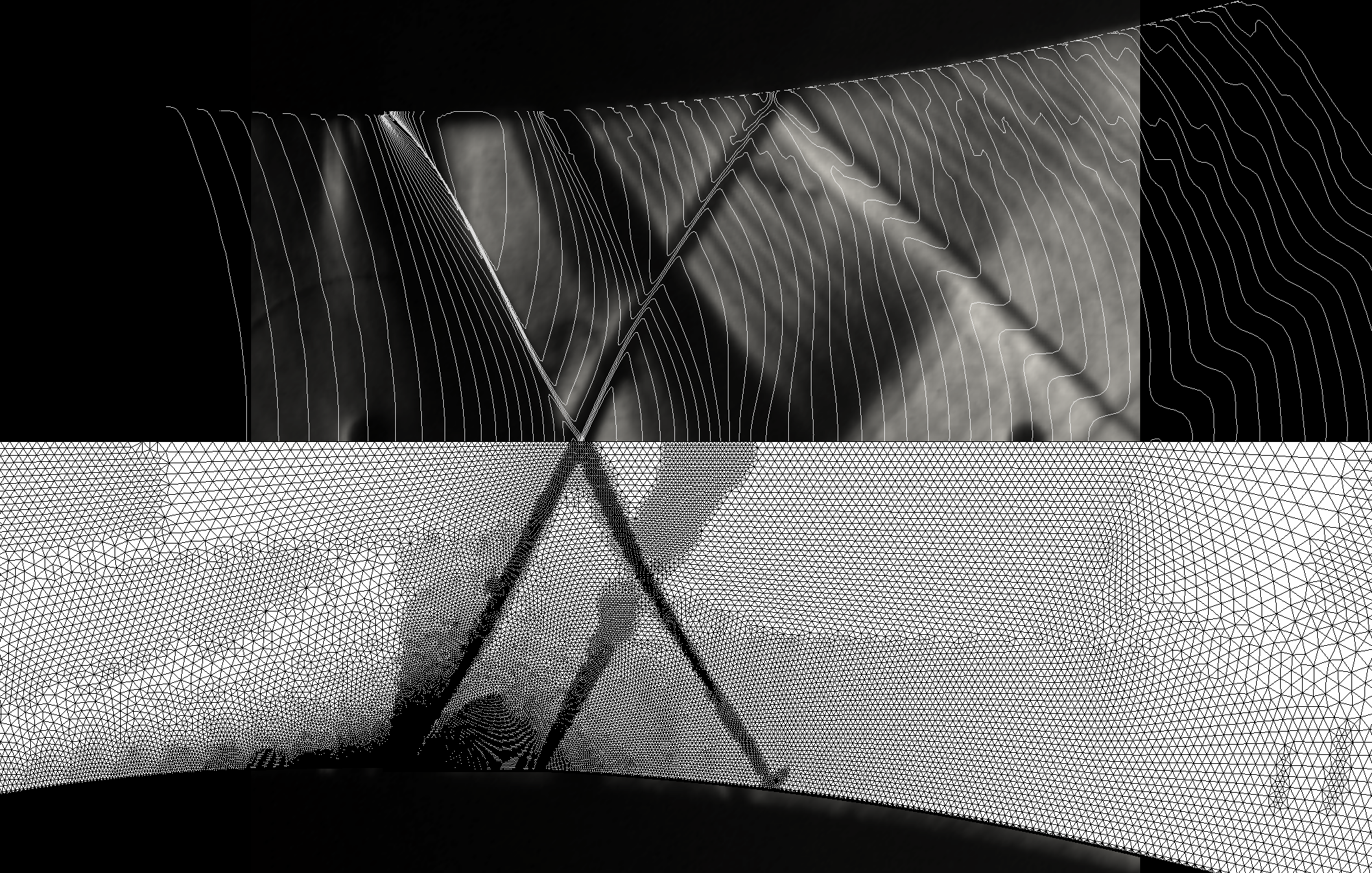
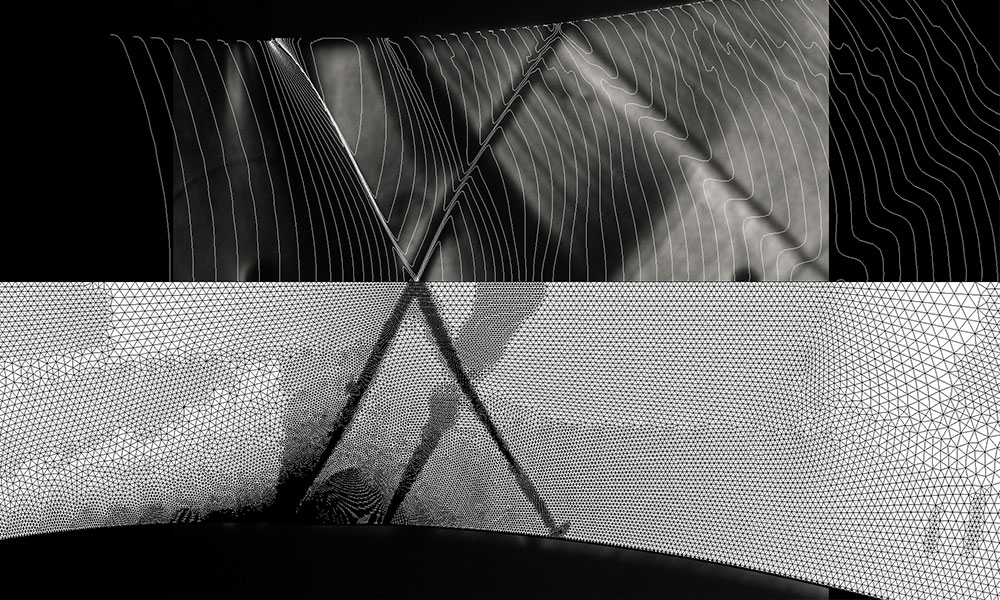 First-ever assessment of a CFD code against experimental data for non-ideal compressible-fluid flows of interests for ORC applications is ongoing. Grid adaptation helps capturing shock waves.